
Darius Milhaud (1892–1974) was the most prolific French opera composer of the 20thcentury – and the most prolific of the epoch’s French musicians in general: nearly 450 works, including 16 operas.
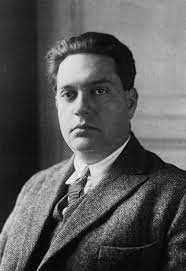
A member of Les Six, his music was influenced by Mediterranean lyricism, jazz, and Brazilian music. (He was a diplomat in Rio de Janeiro in the late 1910s.) Pieces like Le Boeuf sur le toit (1920), La Création du monde (1923), or Scaramouche (1937) are « cool » in a way classical music had never been.
According to Milhaud, “the direction in which the musician must work the most is imagination, fantasy, absolute renewal. The composer must be flexible to all genres, and each work must have its own nature, its particular orchestration, which implies an absolute diversity of means” (Le Ménestrel, 9 December 1927). His operas range from chamber operas to historical opera, from Greek tragedy to Beaumarchais. They are, Christopher Palmer (Grove Opera) argued, “euphonious and cacophonous, tender and violent, spiritual and earthy, sensuous and austere, pastoral and urban, colourful and monochrome”.
We look today at Milhaud’s chamber operas of the 1920s.
Les malheurs d’Orphée
- Opéra in 3 acts
- Libretto: Armand Lunel
- First performed: Théâtre de la Monnaie, Brussels, Belgium, 7th May 1926, conducted by Maurice Corneil de Thoran
| ORPHÉE, a healer | Tenor | John-Charles Thomas |
| EURYDICE, a gypsy | Soprano | Lina Bianchini |
| Chorus of Tradesmen | ||
| The Cartwright | Decock | |
| The Marshal | Maudier | |
| The Basketweaver | Demoulin | |
| Chorus of Animals | ||
| The Bear | Raidich | |
| The Wolf | Mertens | |
| The Fox | De Carlez | |
| The Wild Boar | Arnaud | |
| Chorus of Gypsies | ||
| Older Sister | Ballard | |
| Younger Sister | Gerday | |
| Twin Sister | Laudy | |
Les malheurs d’Orphée updates the Greek myth of Orpheus to the twentieth century, and sets it in the Camargue. Orphée, the village healer, falls in love with the gypsy Eurydice, who leaves her tribe to be with him; she dies of a mysterious illness, which Orphée cannot cure; and her sisters beat him to death in revenge.
Milhaud wrote the opera in two months, at the request of the Princesse de Polignac, an American-born heiress. Reviewing the Brussels première, Francis Poulenc (Le Ménestrel, 21 May 1926) thought the emotional and tender, tragic and pastoral score was Milhaud’s best work for the stage.
The three-act opera lasts barely half an hour. It is a curious mixture of the neoclassical and the avant-garde. Like 19th century opera, it is divided into clear numbers (choruses, arias, love duets, chanson, and grand air), but they only last only a couple of pages. The music is polytonal (simultaneously using two or more keys). It features dances (a rumba in the opening chorus), post-Stravinskyan rhythms (e.g., the scene with the three sisters and the death of Orphée), and moments of almost nursery rhyme-like simplicity (Eurydice’s music in Act I).
It is scored for a chamber orchestra of 13 instruments, all soloists except for two clarinets; often, only one or two instruments play at a time. Poulenc was struck by the mastery with which Milhaud combined timbres, “attaining in pathos a power that disconcerts if one thinks of the means employed”. However, the Larousse Mensuel Illustré (April 1927) found the music both strident and monotonous; Milhaud abused woodwinds and the trumpet.
Orphée was performed in Paris, Buenos Aires, and the USA in 1927, and Germany in 1931. After World War II, it was performed in the USA, the UK, Italy, Germany, and the Netherlands.
Listen to: Jacqueline Brumaire (Eurydice) and Bernard Demigny (Orphée), with the Orchestre de l’Opéra de Paris, conducted by Darius Milhaud, 1956.
Le pauvre matelot
- Complainte in 3 acts
- Libretto: Jean Cocteau
- First performed: Opéra-Comique, Paris, 16 December 1927
| The wife | Soprano | Madeleine Sibille |
| The fisherman | Tenor | Legrand |
| Her father | Bass | Felix Vieuille |
| Her friend | Baritone | Louis Musy |
Le pauvre matelot is like one of Simenon’s romans durs. It is set in a portside tavern. A woman has waited 15 years for her husband, a sailor, to return. He does, under a false identity: he pretends to be a friend of her husband, who is imprisoned for debt. Still unaware of who he really is, the faithful Penelope batters him to death with a hammer, and robs him to pay her husband’s supposed debts. She and her father-in-law hide the body in a cistern.
Le pauvre matelot was Milhaud’s most performed opera, staged hundreds of times throughout Europe and America. Roland-Manuel (Le Ménestrel, 23 December 1927) thought it was Milhaud’s most melodic work, and praised his depiction of settings and human souls. “Milhaud’s greatest virtue is the profoundly human character of his art.”
The story is tight, and the music more lyrical than Orphée. Milhaud (Ménestrel, 9 December 1927) explained that he tried to write tuneful music in the style of sea shanties; the writing was simple and uncluttered, only thickening when the drama demanded it, and the complexity was imposed by the logic of the situation.
Listen to: Jean-Luc Maurette (the Sailor), Maryse Castets (the Sailor), Jean-François Gardeil (the Friend), and Jean Ségani (the Father), with the Orchestre National Bordeaux Aquitaine, 2002.
Trois opéras-minute
I: L’Enlèvement d’Europe
- Opéra-minute in 8 scenes
- Libretto: Henri Hoppenot
- First performed: Baden-Baden, Germany, July 1927
| AGÉNOR | Bass | |
| PERGAMON | Baritone | |
| JUPITER-TAURIN | Tenor | |
| EUROPE | Soprano | |
| Chorus of Mistresses-Servants | 1 soprano 1 Mezzo 1 Contralto | |
| Chorus of Soldiers-Labourers | 1 Tenor 1 Baritone 1 Bass |
SETTING: Outside the country house of Agénor, King of Thebes
In 1927, Paul Hindemith commissioned L’Enlèvement d’Europe for a festival of contemporary music (Baden-Baden, July). The eight-minute skit is about a princess who prefers bulls to beefy blokes, and features a mocking chorus of “Mou!” (and other low remarks). La vache!
Finding Europe impossible to market on its own, the Universal publishers asked Milhaud to create two more works: L’Abandon d’Ariane (written in two days) and La Délivrance de Thésée (for decades, the world’s shortest opera), premièred at Wiesbaden in April 1928. The scores and libretti of these latter two operas are not available.
Telling three Greek myths in less than half an hour, these opéras-minute stand at the other end of the opposite operatic scale from the 15-hour Ring of Wagner – whom Milhaud loathed. “À bas Wagner!” he shouted in 1921. Parsifal “sickened [him] by its pretentious vulgarity. I did not realise that what I felt was merely the reaction of a Latin mind, unable to swallow the philosophico-musical jargon and the shoddy mixture of harmony and mysticism in what was an essentially pompous art.” By contrast, these little operas are short and succinct, over barely before they’ve begun.
Listen to: L’Enlèvement d’Europe; L’Abandon d’Ariane; and La Délivrance de Thésee, conducted by Milhaud, Paris, 1929
Works consulted
- Francis Poulenc, Le Ménestrel, 21 May 1926
- Le Ménestrel, 9 December 1927
- Roland-Manuel, Le Ménestrel, 23 December 1927
- Terry Teachout, “Modernism With a Smile”, Commentary, April 1998
- Vincent Giroud, French Opera: A Short History, Yale University Press, 2010
- Piotr Kaminski, Mille et un opéras, Paris : Fayard, 2003
 The Opera Scribe
One thought on “251. Les malheurs d’Orphée / Le pauvre matelot / Trois opéras-minute (Milhaud)”