
- Große Oper in 3 acts
- Composer: Louis Spohr
- Libretto: Eduard Heinrich Gehe, after Antoine Lemièrre’s play La Veuve de Malabar (1770)
- First performed: Kurfürstliches Hoftheater, Kassel, Germany, 28th July 1823, conducted by Spohr
Characters
| JESSONDA, a rajah’s widow | Soprano | Katinka Braun / Wilhelmina Schröder-Devrient |
| AMAZILI, her sister | Soprano | Sophie Roland / Beltheim |
| DANDAU, chief Brahmin | Bass | Eduard Berthold / Friedrich Sebastian Mayer |
| NADORI, a young Brahmin | Tenor | Samuel Friedrich Gerstäcker |
| TRISTAN D’ACUNHA, general of the Portuguese | Baritone | Franz Hauser / Keller |
| PEDRO LOPES, colonel of the Portuguese | Tenor | Johann Gottfried Bergmann |
| An Indian Officer | Tenor | Johann Ludwig Tourny |
| Bayaderes | Soprani |
Setting: Goa, early 16th century
Surprising as it may seem, Ludwig Spohr was once considered the greatest composer of his age (at least by Germans and Britons; the French were indifferent), and one of the 10 greatest of all time.1 Jessonda was one of the most highly regarded operas in the German-speaking world: Brahms called it “magnificent”, while Wagner, Mahler, and Strauss conducted it. But the star of both composer and opera has rather fallen since then.
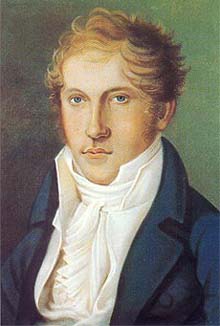
Spohr (1784–1859) – violin virtuoso, conductor, kapellmeister and opera director to the duke of Hesse-Kassel – dominated German music from the death of Beethoven (1827) until his own death.2 “He became, in a way, the arbiter of art in his country, through a kind of tacit magistracy conferred upon by him by his contemporaries,” Clément3 observed. “There was no artistic solemnity over which Spohr did not preside. Wherever music was invited to celebrate a grand anniversary, it was Spohr who wielded the conductor’s baton, and this baton in his hands took on the appearance of a sceptre. The words that came out of his mouth carried authority.” His enduring fame seemed certain: he was, declared The Musical World (1843)4, “the immortal while yet living, founder of a new feeling, if not of a new school in music”, while, not to be outdone, The Atlas5 declared that in his lifetime he was “already and surely canonised to immortality”.
But that immortality did not survive his death. (Atlas shrugged.) Within a few years of his death, his prodigious output – 10 operas, as many symphonies, a great deal of chamber music, religious music, and Lieder alike – soon fell into abeyance – “total oblivion”, in the words of the Viennese critic Hanslick6. Spohr’s innovations – he was the first conductor to use a baton, and he invented the violin chinrest – lasted longer than his music.
Yet Chopin, Mendelssohn, Schumann, Brahms, and Wagner7, as well as Cherubini and Meyerbeer, had admired his works, while musicologists almost tripped over themselves to extol his virtues, and write worshipful panegyrics. When they saw him, they evoked the numinous; it was like Zeus descending from Olympus. “Spohr whom we have hitherto regarded as a dream – as an ideal being – as something intangible, wrapped in a cloud, and visible only to the mind’s eye, which pierces all obscurity – he, Spohr, sat before us,” an awestruck J. W. Davison8 (Musical Examiner) gushed when the composer visited London. He was, assuredly, the equal of the greatest of names. “His reputation ranked with the greatest genius of the present day and would take its position with that of past ages, with Bach, with Handel, Haydn, Mozart and Beethoven, and other great men,” wrote William Horsley9. Likewise, T. D. Eaton (Musical Criticism and Biography, 1872) declared that Spohr was “the finest and most original writer that has appeared since Beethoven. Less wild and eccentric than Weber, more solid and inventive than Mendelssohn, he is great in all styles of music.” When Spohr died, Davison (this time in The Musical World) summed him up as “the last of the Teutonic family of musical giants”, a “remarkable man who excelled in every branch of composition”10, and a counterpart to Homer, Dante, Shakespeare, Molière, Raphael, Michelangelo, or Turner in their respective arts11.
But Spohr fell from his pedestal, and the bust of the venerated composer was relegated to a dusty backroom. To a late Romantic audience, and to many today, Spohr, the last of the Classical composers, seemed stilted. Vigour and distinctiveness of expression, depth, imagination, and sentiment were denied him, the critic Schlüter12 protested. Even today, while there has been a move to rediscover his music and rehabilitate him, some wonder why they bother. David Hurwitz (Classics Today), for instance, calls Spohr’s symphonies “dull, stiff, and … hardly worth reviving now”. While his craftsmanship could not be faulted – his knowledge of harmony, his instrumentation – the music itself seemed uninteresting: “faultily faultless, icily regular, splendidly null, dead perfection, no more,” to quote Tennyson. His works smelt too much of the lamp. “What he lacks is that unexpected flair, as well as the ability to create something in one go,” wrote Fétis13. “One senses too much effort in his music, and often it lacks charm.” (Nevertheless, Fétis praised Spohr’s skilful handling of voices and instruments.)
“Spohr’s misfortune lies in his failure to claim the foremost position in a genre where the audience proves notably demanding, inclined to dismiss anything less than prodigious as tedious,” lamented Clément14. “If only the self-centred frivolity of our music enthusiasts could acknowledge the nuanced layers within great compositions. It is possible to be a composer of considerable merit without standing shoulder to shoulder with Haydn, Mozart, and Beethoven. In such a case, a more equitable evaluation might be afforded to a grave and dignified artist – consistent in correctness and wisdom, whether orchestrating vocal pieces or working with the symphony. Presently, only those in the profession seem capable of recognising the unwavering purity and temperance of Spohr’s style. It is akin to a beautiful autumn sky, exhibiting subtle greyish tones, devoid of thunder, yet enchanting to behold.”
For my part, I find what I have heard of his music – three or four of the symphonies (the Second is the best), two or three of the chamber pieces, an oratorio, a couple of his operas – rather bland. It is undoubtedly well-written; it is agreeable, pleasant, tasteful; but it seems to lack that indefinable something, that spark of genius.
Nevertheless, Spohr valiantly strove to advance music, and Jessonda, the sixth of his operas, points the way to Wagner’s music dramas. Spohr set out to emancipate German opera from the stranglehold of the Singspiel, without yielding an inch to the blandishments of Italian opera.
“The long-expected moment seems at last to have arrived, when the German public, cloyed with the insipid sweetness of the new Italian music [i.e., Rossini], longs for what is of real and intrinsic value,” he declared in an article, Aufruf an deutsche Componisten (Appeal to German Composers). (Writing polemics was a tradition of German opera at least since Gluck; Wagner’s manifestoes on Opera and Drama or Art and Revolution were merely the latest iteration.)
Spohr argued that opera should not be a vehicle for pretty singing, but have a good libretto, one that “shall at the same time please the mind endowed with taste and that which is uncultivated”. The subject matter should be poetical but uncomplicated.
For Jessonda, Spohr adapted Lemièrre’s play La Veuve de Malabar (1770). The plot resembles Spontini’s Vestale: the prima donna is condemned to death; her soldier lover (here, the explorer Tristan da Cunha) vows to rescue her; there is much conflict, as ever, between love and duty; but all ends happily. It is not, however, an opera that would appeal to Hindu nationalists. Set in early 16th century Goa, it describes how the Portuguese (Christian and virtuous) rescue the virtuous Jessonda, widow of the late rajah, from being burnt alive, following her husband (much against her will) to the afterlife in the abominable practice of suttee. “Idolatry has been attacked and overthrown: praise and joy to the God of battles!” the Portuguese exclaim at the end. The Hindus are depicted as murderous fanatics, and their religion an ascetic, death-worshipping rejection of life. The priest Dandau, a bass like Sarastro, urges his followers to wage war on earthly desire. The most sympathetic one, Nadori, a brahmin, rejects Hinduism, and escapes to Portugal. Modi and the BJP would not approve. Moreover, the libretto is full of lofty, moralising platitudes, and as abstract and sententious as the Wagner of Tristan.
Jessonda’s chief innovation is on the musical plane. Spohr argued that opera should be through-composed: continuous music should replace the spoken dialogue of the Singspiel. Thus, although Jessonda is a ‘number’ opera, few of the numbers come to a formal halt (we rarely find those applause-grabbing battery chords of Italian opera); and the music marches on despite scene changes. Each recitative is numbered, and the recitative is often a lyrical, dramatic arioso.
Wagner conducted Jessonda many times, and heeded its lessons. Critics have pointed to similarities with the Annunciation of Death scene in Die Walküre or Siegfried waking the sleeping Brünnhilde; and even an anticipation of the Tristan chord. Much of Tristan’s music – that is, Tristan da Cunha, the baritone hero of Spohr’s opera, not Tristan of Cornwall – is a model for the heroic declamation of Wolfram (Tannhäuser) or Telramund (Lohengrin) – especially when sung by Dietrich Fischer-Dieskau!
However, the score seems, somehow, academic: the work of an accomplished musician (as Spohr undoubtedly was), but not of a theatrical composer. Berlioz15 and the Parisian audience, for one, found it “dull, lacking character, devoid of momentum, contrasts, variety, fresh and grand ideas, the elements that ultimately bring life to music, especially to dramatic music”. From a musical standpoint, the choruses make the most impression; the arias and duets (of which there are plenty) are agreeable, but lack inspiration.
Act I is sombre; it opens with a funeral chorus (andante grave in E flat); it is imposing but lugubrious, more suited to a requiem than to “opera”. Jessonda’s grand aria is unmemorable. The finale – a trio for two women and a tenor – is mild for much of its course, but picks up when the brahmin Nadori falls in love with the sister of the woman whose death he has come to announce.
Act II is a succession of arias and duets, but with little emotional interest. Tristan’s aria, the most effective number to that point, depicts him as an ardent but tender lover. Nadori’s recitative and rondo “Daß mich Glück mit Rosenkröne” has an agreeable melody. Only the finale (parts I and II) is dramatic: the Indians look forward to sacrificing Jessonda, while the Portuguese vow to punish the murder. (They cannot save her, because they have sworn a truce, which does not expire until after the murder.) The finale (largely allegro maestoso in C and allegro vivace in F) is impressive – as Classical as Mozart, but thundering.
The final act is the best. The men’s trio “Auf! und laßt die Fahnen fliegen” is vigorous, but very brief. The melody serves almost as a motif for Portuguese heroism; it recurs in the sisters’ duet when they hope for rescue, and in the triumphant ensemble at the end. The chorus of brahmins invoking the gods is extremely impressive: chromatic, plenty of brass, rolling drums, and flickering flutes.
Overall, however, Jessonda remains a curiosity: neither drama nor music catch fire. Like the heroine (happily for her).
Recordings
Listen to: Julia Varady (Jessonda), Renate Behle (Amazili), Thomas Moser (Nadori), Kurt Moll (Dandau), and Dietrich Fischer-Dieskau (Tristan d’Acunha), with the Philharmonisches Staatsorchester Hamburg, conducted by Gerd Albrecht, Hamburg, 1990. Orfeo.
Works consulted
- Hector Berlioz, Journal des débats, 30 April 1842
- F.-J. Fétis, Biographie universelle des musiciens (2ème édition), Paris: Librairie de Firmin Didot Frères, Fils et Cie., 1869
- Félix Clément, Les musiciens célèbres depuis le 16ème siècle jusqu’à nos jours, Paris : Librairie Hachette & Cie, 1878
- Clive Brown, Louis Spohr: A Critical Biography, Cambridge University Press, 1984
- See also Phil’s Opera World.
- The others, according to the Musical World, were Handel, Bach, Gluck, Haydn, Mozart, Beethoven, Weber, Mendelssohn, and, the sole Italian, Cherubini among that Teutonic panoply. ↩︎
- See Clive Brown, Louis Spohr: A Critical Biography, Cambridge University Press, 1984, p. 1. ↩︎
- Félix Clément, Les musiciens célèbres, F.-J. Fétis, Biographie universelle des musiciens (2ème édition), Paris: Librairie de Firmin Didot Frères, Fils et Cie., 1869, pp. 356-57. ↩︎
- Brown, p. 279. ↩︎
- Brown, p. 282. ↩︎
- Brown, p. 342. ↩︎
- Brown, p. 1. ↩︎
- Brown, p. 275. ↩︎
- Brown, p. 341. ↩︎
- Brown, p. 341. ↩︎
- Brown, p. 340. ↩︎
- Brown, p. 341. ↩︎
- F. J. Fétis, Biographie universelle des musiciens, 2nd edition,Tome 8ème,Paris : Librairie de Firmin Didot Frères, Fils & Cie, 1867. ↩︎
- Clément, p. 355. ↩︎
- Hector Berlioz, Journal des débats, 30 April 1842. ↩︎
 The Opera Scribe
Spohr is like Beethoven, only much more polite — and subsequently less involving. An obsession with refined taste has never served the arts. Let it all hang out, at the children say nowadays.
LikeLiked by 1 person
Well said. Spohr strikes me as a less interesting, less imaginative, very much chaster Beethoven. An academic composer, if you like.
LikeLike