
One of Rameau’s most popular works and Donizetti’s first opera were both based on the same story: the myth of the Cretan sculptor who falls in love with a statue – a metaphor both for the desire for ideal beauty, and the artist’s love for his own creation.
According to Ovid, Pygmalion became a confirmed misogynist after witnessing the antics of the Propoetides: they denied the divinity of Venus, prostituted themselves in public, and were transformed into flints. “Revolted by the many faults which nature has implanted in the female sex” (there’s the Ancient Roman patriarchy for you!), Pygmalion turned to the Ideal.
“With marvellous artistry, he skilfully carved a snowy ivory statue. He made it lovelier than any woman born, and fell in love with his own creation. The statue had all the appearance of a real girl, so that it seemed to be alive, to want to move, did not modesty forbid. So cleverly did his art conceal its art. Pygmalion gazed in wonder, and in his heart there rose a passionate love for this image of a human form.”
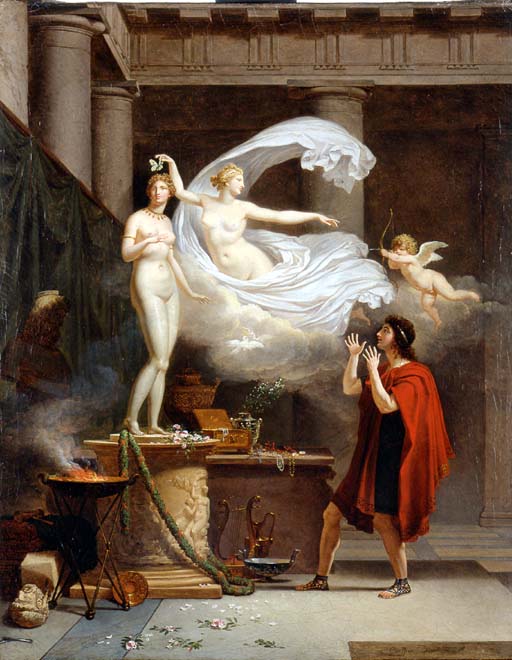
At the festival of Venus, he prayed to the goddess to give him a wife like the ivory maid. Venus listened, and granted his prayer. When he returned home, the statue came to life: it was not marble but human flesh that he felt. “At long last, he pressed his lips upon living lips, and the girl felt the kisses he gave her, and blushed. Timidly raising her eyes, she saw her lover and the light of day together.”
– Ovid, Metamorphoses, trans. Mary M. Innes, 1955 Penguin
Pygmalion (Pigmalion)
- Acte de ballet
- Composer: Jean-Philippe Rameau
- Libretto: Sylvain Ballot de Sauvot, after an entrée in Antoine Houdar de La Motte’s Le Triomphe des Arts (1700)
- First performed: Théâtre de l’Opéra, Paris, 27th August 1748
| PYGMALION | Haute-contre | Pierre Jélyotte |
| CÉPHISE | Soprano | Mlle Rotisset de Romainville |
| L’AMOUR [Cupid] | Soprano | Marie-Angélique Coupée |
| LA STATUE ANIMÉE [The Statue] | Ballerina and soprano | Mlle Puvignée fille |
For a little work written in only eight days, Pygmalion has enjoyed a marked success. In the 18th century, itwas Rameau’s most performed work after Castor et Pollux, remaining in the French repertoire until 1781.
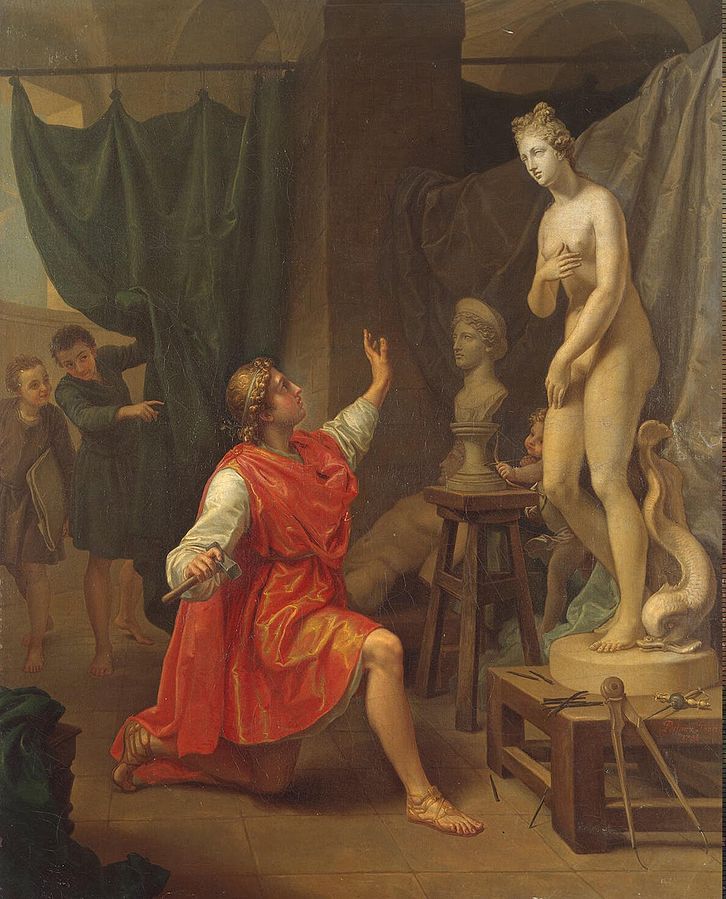
“Never before had such a strong, distinct desire, such a decided preference for the works of a living author been seen,” wrote the Mercure de France (April 1751), “as the public demonstrated on this occasion for the music of our Orpheus. Just before the beginning of Pygmalion, the entire assembly expressed its joy in a very lively manner. The overture revived these demonstrations, and each piece in the work was universally applauded with enthusiasm.”
Similarly, Piotr Kaminski considers it the equal of Les Indes galantes, and the one indisputable masterpiece among the eight actes de ballet Rameau composed between 1748 and 1754.
Modern listeners might be more moderate in their enthusiasm than 18th century Parisians, but Pygmalion is nevertheless a pleasant way to pass 45 minutes. Certainly, since its resurrection in 1913, it has been one of Rameau’s more frequently performed theatrical works; it does not make the enormous demands on the audience’s attention or patience, or on the opera house’s resources, of his tragédies lyriques, many of which last three hours, and call for enormous ballet corps and choristers, and elaborate special effects and scene changes.
Pygmalion, conversely, is short and easy to produce. It has only one vocal rôle that matters: the tenor, onstage throughout, with a chorus and four dancers (the Statue and, at a pinch, only three Graces).
The orchestration is limpid, often only violins and flute accompany the vocal line. As often in French operas of the time, it is difficult to distinguish between the recitative (which ornaments syllables) and the ‘airs’ (which are short and seldom tuneful).
The overture (two sections: moderato and fast; oboes and bassoons prominent) depicts Pygmalion sculpting the statue, including the blows of his chisel.
The statue soon comes to life, and the Graces teach her how to dance: they dance a gavotte, a menuet, a chaconne, a loure, a passepied, and a rigaudon; the statue then dances a sarabande and a tambourin.
Rameau was particularly pleased with the effect of the air “L’Amour triomphe”, sung by Pygmalion with the chorus, as an instance of harmonic proportion: Pygmalion repeats the words on the 17th, double octave of the third, while the fundamental sound is multiplied by unisons and octaves, and the 2nd octave of the fifth of this sound is also multiplied. “This is where harmony triumphs, without the assistance of a melody that affects by itself.”
The part of Pygmalion was created by Jélyotte, one of the leading singers of his day; for him, Rameau wrote the Italianate da capo aria “Règne l’amour”, with nine-bar passages of coloratura. The opera ends with a fun contredanse.
Recordings
Listen to: Cyrille Dubois (Pygmalion), with Les Talens Lyriques, conducted by Christophe Rousset, Vienna, 2017. Aparté AP155.
Il Pigmalione
- Scena lirica in 1 act
- Composer: Gaetano Donizetti
- Libretto: Based on Antonio Simeone Sografi’s libretto for Giambattista Cimadoro’s Pimmaglione (1790)
- Composed: 1816 (“begun on 15 September and finished 1 October at almost two in the morning”)
- First performed: Teatro Donizetti, Bergamo, 13th October 1960, conducted by Armando Gatto
| PIGMALIONE | Tenor | Doro Antonioli |
| GALATEA | Soprano | Oriana Santunione |
Donizetti was only 18 when he wrote this little opera, presumably as an exercise for his former teacher, Mayr. It was never performed in his lifetime, and remained unperformed for nearly 150 years.
This time, the statue only comes to life at the end of the opera; the tenor sings uninterrupted for 31 minutes. The Italians, one presumes, were interested in the tenor’s voice and emotions, whereas the French wanted a ballet.
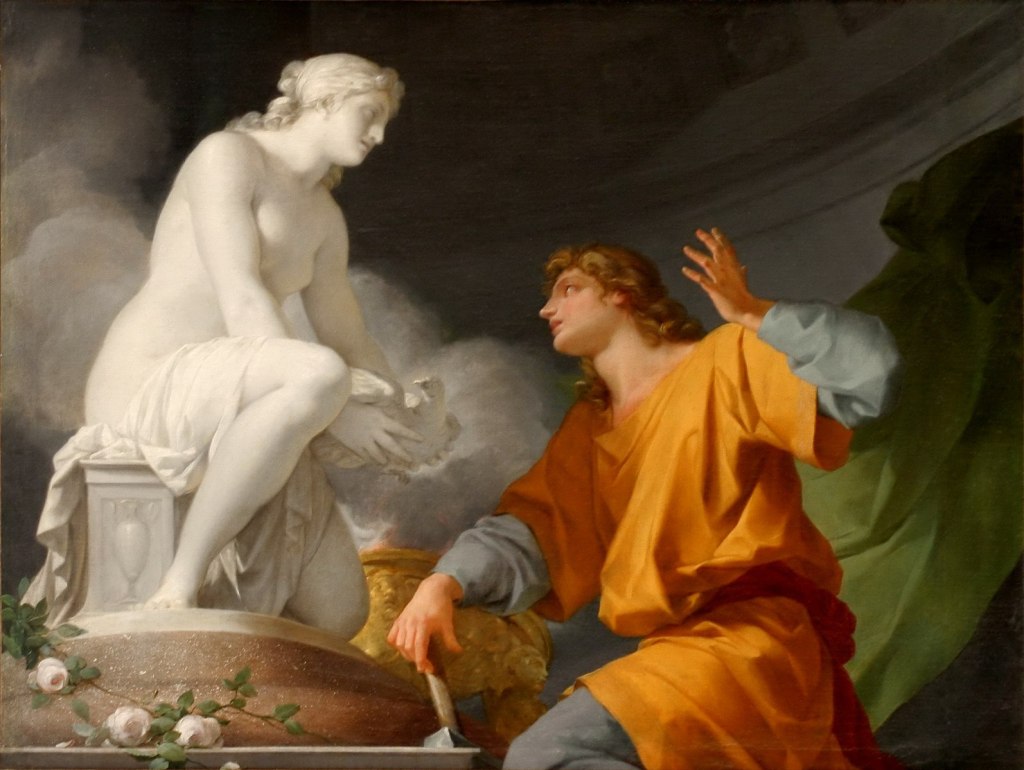
This amounts to a tenor mad scene (although more Classical than Lucia di Lammermoor’s): the singer must express despair, loss of faith in his art, anguish, hope, fury, and tenderness; he prays to the gods; he longs for death; and he resolves to die for the statue.
Although this was his first opera, Donizetti already showed a clear theatrical instinct, skilfully depicting all the emotions the text stipulates. He can hit the note of pathos (notably in “Voi che intorno a me visitate” and the prayer “Voi che lo stato mio”), displaying the seed of that ability to write sweet, plaintive melodies that would blossom in the 1830s into some of bel canto opera’s great moments. In the last six minutes, the soprano finally sings, and joins the tenor in a little duet. The opera fades out on a clinch.
(See also my pal Phil’s review.)
Recordings
Listen to:
- Original cast recording (of a Donizetti opera!). Myto MCD00241
- Paolo Pellegrini (Pigmalione) and Susanna Rigacci (Galatea), with the Orchestra giovanile “In Canto”, conducted by Fabio Maestri, 1990.
Works consulted
- Piotr Kaminski, Mille et un opéras, Paris : Fayard, 2003
- Louis Laloy, Rameau, Paris: Librairie Félix Alcan, 3rd edition, 1919
- “Pygmalion”, Opéra Baroque
- William Ashbrook, Donizetti and his Operas, Cambridge University Press, 1982
- Charles Osborne, The Bel Canto Operas of Rossini, Donizetti and Bellini. Portland, Oregon: Amadeus Press, 1994.
 The Opera Scribe
This review seems like
LikeLike
I think your review of the Rameau doesn’t have much feeling for the style.
LikeLike