
Every year, the Italian town of Pesaro holds a festival honouring its most famous son: the composer Gioachino Rossini, born there on leap year day 1792. Rossini’s parents were the town trumpeter, Giuseppe, and a seamstress, Anna, who became a comic opera singer when her husband was arrested for republican fervour. The young Rossini grew up in Lugo and Bologna, where he studied singing and accompaniment, counterpoint, the cello and the horn; sang as a boy soprano; joined a philharmonic society; discovered the music of Haydn and Mozart; and wrote his first works (string sonatas, performed when he was 12; a cantata when he was 16).
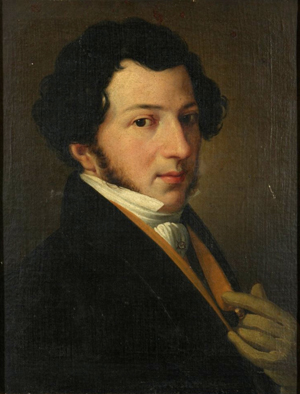
By the time he was 21, Rossini had written 10 operas: chiefly farse, clever, amusing one-act trifles in the vein of Paisiello or Cimarosa. Like the works of Wodehouse, they deal with the eternal verities of love and money; the plots revolve around young lovers outwitting their match-making elders, impostors, impersonators, and mistaken identity.
Those first operas launched a career that would transform Italian opera and usher in the Romantic age. Rossini, a child of the late 18th century, belongs in spirit to the Enlightenment — he saw himself as “the last of the classics”; Donizetti and Bellini would go further in writing Romantic music that spoke directly to the heart and was simpler and more melodic, less ornamented with curlicues and furbelows. But Rossini, that transitional, Janus-like figure, showed them the way.
“The hallmark of his early music is an eloquence, a melodic fluency without rival,” Rossini’s friend and admirer, the scholar Raffaello Foresi wrote. “It is a language as clear as light, swift as flame, unique like all things in the world born of spontaneous creation, guilelessly sincere like the smile of youth, sensuously loving like the embrace of our women, splendid and warm like the Italian sun, iridescent like our sunsets, proud and open like the faces of the Japhetic race [Caucasians], luxuriant like the vegetation of our countryside, ideal like the marvels of Greek art, and true as the tangible expressions of the human soul.” (Quoted in Enrico Montazio, Giovacchino Rossini, 1862.)
La cambiale di matrimonio (1810)
- Farsa in 1 act
- Libretto: Gaetano Rossi
- First performed: Teatro San Moisè, Venice, 3rd November 1810
| TOBIA MILL, an English merchant | Buffo bass | Luigi Raffanelli |
| FANNY, his daughter | Soprano | Rosa Morandi |
| EDOARDO MILFORT | Tenor | Tommaso Ricci |
| SLOOK, a Canadian merchant | Buffo bass | Nicola de Grecis |
| NORTON, Mill’s cashier | Bass | Domenico Remolini |
| CLARINA, Fanny’s chambermaid | Mezzo | Clementina Lanari |
| Mill’s shopkeepers and servants |
SETTING: Mill’s house, London, the 18th century
Determined to become an opera composer, Rossini moved to Venice in 1810. His first performed opera was written in a few days for the Teatro San Moisè, a small theatre specialising in farse, and which was legally required to stage a couple of new works each season. It would be the first of five for that venue.
A Canadian rough diamond, Slook, intends to procure a wife, as he would any other commodity; his English business contact, Tobias Mill, contracts to supply his own daughter, Fanny; she objects to being treated like a mere baggage, and the deal falls through.
Cambiale is a competent first effort. The score contains little that is memorable, but shows Rossini could already write light and fleet-footed music. The most effective numbers are the patter trio in the quarrel scene and the buffo duet of the splenetic and phlegmatic buffo basses, which anticipates, for instance, that in Act II of La Cenerentola.
The story is in the line of Cimarosa: an obdurate, match-making father is an obstacle to a young couple’s love. There is a slight element of satire of ottocento marriages, pushing the notion that a daughter is goods to be disposed of for her father’s profit, to a ludicrous extent; and of England, which the Industrial Revolution had made the foremost commercial power in Europe.
Cambiale was a success, performed at least 12 times that season, then staged in Venice, Trieste, Padua, Spain (1816) and Vienna (in the 1830s).
Watch: John del Carlo, Janice Hall, Alberto Rinaldo and David Kuebler, conductor Gianluigi Gelmetti, 1989 Schwetzingen.
L’equivoco stravagante (1811)
- Dranma giocoso in 2 acts
- Libretto: Gaetano Gasparri
- First performed: Teatro del Corso, Bologna, 26th October 1811
| GAMBEROTTO, a farmer | Bass | Domenico Vaccani |
| ERNESTINA, daughter of Gamberotto | Soprano | Marietta Marcolini |
| ROSALIA, her maid | Mezzo | Angiola Chies |
| BURALICCHIO | Bass | Paolo Rosich |
| ERMANNO, Ernestina’s tutor | Tenor | Tommaso Berti |
SETTING: Italy, the early 19th century
No man is a prophet in his own country, and Rossini’s only work for Bologna, where he had grown up and studied, was a failure. Not because the work was bad (it isn’t), but because the public thought it shocking, even “vicious”.
The bluestocking Ernestina has two suitors: the foppish Buralicchio and the philosophy tutor Ermanno. To get rid of his rival, Ermanno tells Buralicchio that Ernestina isn’t a woman at all: she is a male castrato (a capon) and an army deserter, in drag. Tame by modern standards, but enough for the police to ban the opera after three performances on grounds of obscenity.
The witty libretto satirises the cultural pretensions of Ernestina and her father, the wealthy farmer Gamberotto (literally “prawn”), who suffers from fleas, and inflicts inappropriately agricultural metaphors on his guests. Father and daughter speak in hyperbolically highflown, mock-Metastasian oratory. For example, this is how Ernestina invites her suitors to take a seat:
Le macchine corporee / In linea curva adattino / Su due comodità.
(“Let the bodily mechanisms conform in a curved line to two points of ease.”)
Likewise, Gamberotto dictates an extravagant apology to Buralicchio:
Volgi le amabili pupille elastiche / A quella bestia senza giudizio, / Figliola equivoca d’un semideo / D’un Mardocheo di nostra età.
(“Turn your charming, elastic eyes toward that beast without reason, ambiguous daughter of a demigod, of a Mardocheus of our age.”)
The music, full of verve, is an advance on Cambiale. The finale unleashes the Rossinian stretta in a situation analogous to Il Barbiere’s: the family quarrel, and freeze in dismay, alarmed that the militia will hear them. Rossini shows, too, his penchant for percussion and military music (as in the Gazza ladra overture or the Matilde di Shabran Act I finale). Ermanno’s aria “Sento da mille furie” (somewhat conventional) and Ernestine’s Rondo con coro “Se per te lieta ritorno” make an effect in performance.
The score’s glory, however, is the quintet “Speme soave, ah, scenda”, the first number really stamped with Rossini’s comic genius; it ends in an exhilarating stretta that looks forward to the sextet in La Cenerentola.
Highlights:
- “Speme soave, ah, scenda” (quintet)
Watch: Pesaro 2019, conducted by Carlo Rizzi.
L’inganno felice (1812)
- Farsa in 1 act
- Libretto: Giuseppe Maria Foppa
- First performed: Teatro San Moisè, Venice, 8th January 1812
| Duke BERTRANDO | Tenor | Raffaele Monelli |
| ISABELLA, his wife | Soprano | Teresa Giorgi-Belloc |
| ORMONDO, the Duke’s intimate | Bass (or baritone) | Vincenzo Venturi |
| BATONE, the Duke’s confidant | Bass (or baritone) | Filippo Galli |
| TARABOTTO, a miner | Bass | Luigi Rafanelli |
| Miners, Duke’s followers, soldiers |
SETTING: A seaside mining village in Italy, the distant past
Almost forgotten today, L’inganno felice was one of Rossini’s most popular early works: it was performed 50 times in a row, earning the composer 100 zecchini, then staged across Europe and as far as New York in the early 19th century.
Labelled a farsa, it is really a sentimental melodrama: the heroine is the first wife of a duke who believed her unfaithful and had her thrown into the sea; she was rescued by Tarabotto, and lives with him as his niece. Husband and wife are reunited, and the wicked Ormondo, who accused her falsely, is punished.
The best pieces in the score are the terzetto “Quel sembiante quello sguardo” when the duke half-recognises his ‘dead’ wife, and the pretty andante that opens the finale.
Stendhal compared it to “the early paintings of Raphael fresh out of Perugino’s studio: one finds in it all the flaws and hesitations of first youth”, but noted that “genius bursts forth from every corner. A trained eye can easily recognise, in this one-act opera, the parent ideas of 15 or 20 major passages that would later bring fame to Rossini’s masterpieces.” Montazio likened those youthful inspirations to “fertile bees swarming in a hive in ferment. That sacred swarm which filled the musician’s mind was destined, in less than 10 years, to fill the world with exquisite melodies, delight and solace to perhaps the most tempestuous century of modern civilisation.”
Highlights:
- “Quel sembiante quello sguardo” (terzetto)
- “Tacita notte oscura” (finale)
Listen to: Luigi Petroni, Carmela Remigio, conductor Giancarlo Andretta, Padua 1998.
Ciro in Babilonia, o sia, La caduta di Baldassarre (1812)
- Oratorio sacro con cori in 2 acts
- Libretto: Conte Francesco Aventi
- First performed: Teatro Communale, Ferrara, 14th March 1812
| BALDASSARRE, King of the Assyrians in Babylon | Tenor | Eliodoro Bianchi |
| CIRO, King of Persia | Contralto | Marietta Marcolini |
| AMIRA, Ciro’s wife | Soprano | Elisabetta Manfredini |
| ARGENE, Amira’s confidante | Soprano | Anna Savinelli |
| ZAMBRI, a Babylonian prince | Bass | Giovanni Layner |
| ARBACE, captain of Baldassarre’s army | Tenor | Francesco Savinelli |
| DANIELLO, a prophet | Bass | Giovanni Fraschi |
| CAMBISE, Ciro’s small son | Silent | |
| Grandees of the kingdom, soldiers |
SETTING: Babylon, 539 BCE
Rossini had a talent for comedy from the outset, but his early serious operas (as late as Elisabetta regina d’Inghilterra) are all too apt to fall into the commonplace and conventional: empty operas with a great deal of singing, but little music.
Ciro, his first, was written in less than three weeks for Ferrara, to be performed during Lent, when only Biblical-themed operas and plays could be performed. During the Persian king Cyrus the Great’s siege of Babylon, his enemy Belshazzar captures his wife and son; Belshazzar is ultimately defeated in battle.
Ciro has gone down in musical annals as a fiasco: Rossini related that he commemorated its failure with a marzipan shipwreck — although the local press called it a success, and it was performed elsewhere in Italy, as well as in Germany, Vienna, London and Lisbon.
The opera is static, long and dull; it is full of vocal acrobatics (fioritura and coloratura galore), but there is little melody. Numbers like Amira’s “Vorrei veder lo sposo”, the Act II duet, or Ciro’s last aria are full of virtuosic display and barren passagework — all technique and no inspiration; one ends up listening to how they sing (the contralto’s B flat, for instance), not what.
The most famous (or, rather, notorious) piece in the opera is an aria on one note, “Chi disprezze gl’infelici”, written for a seconda donna who was “ugly beyond all description, and with a voice to match”; the only note she could sing tolerably, according to Rossini, was a B flat. Pity, however, the poor modern soprano who has to sing an aria that consists of B flat crotchet, B flat quaver, B flat quaver, B flat crotchet, B flat quaver, B flat quaver, B flat quaver, B flat quaver, B flat crotchet.
The 2012 Pesaro production turned it into a meta-theatrical joke. The concept is that the opera is a 1920s Cecil B. DeMille-style film; the chorus are the cinema audience. In this scene, the aria is played as a malfunction: the film screen breaks down, the singer gestures angrily at the projector operator, the audience turn their back on the singer and storm out, the singer slumps dejectedly into a chair, finishes her one-note aria, then walks off.
The writing on the wall scene (‘Mene mene tekel upharsin’) is inept: a Hebrew prophet fulminates entirely in recitative. Either it did not capture Rossini’s imagination, or he phoned it in. Reto Müller (Naxos), however, blames the librettist. Unquestionably, whether the fault be Rossini’s or the librettist’s, the writing is on the wall for Ciro.
Watch: Ewa Podles, Michael Spyres, Jessica Pratt, Pesaro 2012, conducted by Davide Livermore.
La scala di seta (1812)
- Farsa in 1 act
- Libretto: Giuseppe Maria Foppa
- First performed: Teatro San Moisè, Venice, 9th May 1812
| DORMONT, tutor | Tenor | Gaetano Del Monte |
| GIULIA, his ward | Soprano | Maria Cantarelli |
| LUCILLA, Giulia’s cousin | Mezzo | Carolina Nagher |
| DORVIL | Tenor | Raffaelle Monelli |
| BLANSAC | Bass | Nicola Tacci |
| GERMANE, Dormont’s servant | Buffo bass | Nicola De Grecis |
| A servant | Silent |
SETTING: Paris, 18th century
Another work for Venice’s Teatro San Moisè, La scala di seta was criticised for its stale libretto, thought to plagiarise Cimarosa’s Matrimonio segreto. The situation is the same as Cimarosa’s opera or indeed Rossini’s own Cambiale di matrimonio, showing the stereotyped nature of these farse plots: Giulia is secretly married to Dorvil, but her guardian wants her to marry Blansac. A drunken servant misunderstands the situation.
The sentimental comedy was based on Planard’s libretto for Gaveaux’s L’échelle de soie (1808). It adroitly exploits a simple situation, skilfully getting all characters on stage (three up the silk ladder, another hiding under a tablecloth, and a fifth behind the coal scuttle). Richard Osborne calls it “a diverting piece, freshly and fluently written, memorable more for Rossini’s skill in ordering the comic mechanism (the rhythmic ordering, above all) than for anything especially striking in theme or harmony.”
The best pieces are the frisky, scampering overture and the quartet in which Blansac woos Giulia, watched by the jealous Dorvil and the servant, both in hiding.
La Scala di seta was performed in Barcelona and Lisbon in the 1820s. (See also review here.)
Highlights:
- “Sì che unito a cara sposa” (quartet)
Listen to: Fulvio Massa, Teresa Ringholz, Francesca Provvisionato, and Ramón Vargas, conductor Marcello Viotti, 1992.
Demetrio e Polibio (1812)
- Melodramma serio in 2 acts
- Libretto: Vincenzina Viganò-Mombelli
- First performed: Teatro Valle, Rome, 18th May 1812
| DEMETRIO, King of Syria, under the name of EUMENE | Tenor | Domenico Mombelli |
| POLIBIO, King of Parthia | Bass | Lodovico Olivieri |
| LISINGA, Polibio’s daughter | Soprano | Maria Ester Mombelli |
| DEMETRIO, son of the aforesaid Demetrio, under the name of SIVENO | Contralto | Marianna Mombelli |
| Grandees of the kingdom | Chorus | |
| Polibio’s guards. Demetrio’s followers. Priests. | Extras |
SETTING: The Parthian capital, 2nd century BCE
Demetrio e Polibio was Rossini’s first success in opera seria — and his first ever opera, written, like Mozart before him, when he was only a teenager. At the age of 15, he composed it piecemeal for the tenor Domenico Mombelli, and, perhaps, was not even aware that it would be so used.
The story concerns two middle-aged men vying for the love and possession of an androgynous youth (and there’s nothing queer-coded about that!). Polibio has raised Siveno as his son, marries him to his daughter, and intends to make him his heir; Siveno’s natural but estranged father, Demetrio, disguised, claims his son.
The drama is stiff and formulaic, but the music is graceful. Stendhal raved about it: “I don’t think I have ever felt more vividly that Rossini is a great artist. We were transported. Each new pièce offered us the purest melodies, the most exquisite airs. We soon found ourselves as if lost in the winding paths of a beautiful garden, such as Windsor, for example, where every new vista seems the most beautiful of all, until, reflecting a little on your admiration, you realise you have given twenty different things the title of ‘most beautiful’.”
The best pieces are Lisinga and Sireno’s rather exquisite andantino duet “Questo cor ti gura amore”, which Stendhal praised for painting love with grace and without sorrow.That duet, as well as the cavatina “Pien di contento il sieno”, Montazio noted, made such a deep impression that half the women in Roman society “swooned with love and enthusiasm for the young maestro”.
Nor was the love always platonic. Rossini had inherited his mother’s beauty. He took pride in the charm of his features, which served as a model for [the sculptor Antonio] Canova, and by exploiting his physical gifts for as long as he could, he always managed to pair his artistic triumphs with amorous conquests.
The Act II quartet “Donami omai Siveno” is astonishingly accomplished for a teenager, it has a lovely andante section, “Padre qual gioja provo”, and ends in a furious stretta — the first of many ensembles that would be the glory of Rossinian opera. “Nothing in the world would surpass this piece,” Stendhal enthused; “even if Rossini had written only this one quartet, Mozart and Cimarosa would have to acknowledge an equal. There is, for instance, a lightness of touch (what in painting one calls ‘done with nothing’) that I have never seen in Mozart.”
Demetrio e Polibio was performed in several Italian towns, as well as in Vienna and Germany.
Highlights:
- “Questo cor ti giura amore” (Act I duet)
- “Donami omai Siveno” (Act II quartet)
Listen to: Sofia Mchedlishvili, Victoria Yarovaya, César Arrieta and Luca Dall’Amico, conductor Luciano Acocella, Bad Wildbad 2016, Naxos.
La pietra del paragone (1812)
- Melodramma giocoso in 2 acts
- Libretto: Luigi Romanelli
- First performed: Teatro alla Scala, Milan, 26th September 1812
| LA MARCHESA CLARICE, a brilliant widow, shrewd and kind-hearted, who aspires to win Count Asdrubale’s hand | Contralto | Marietta Marcolini |
| LA BARONESSA ASPASIA, | Soprano | Carolina Zerbini |
| DONNA FULVIA, rivals of the same, not out of love, but purely out of self-interest | Mezzo | Orsola Fei |
| IL CONTE ASDRUBALE, a wealthy gentleman disinclined to marry, not from any deep aversion to matrimony, but from a supposed difficulty in finding a suitable wife | Bass | Filippo Galli |
| IL CAVALIER GIOCONDO, poet, the Count’s friend, and a modest, unrequited lover of the Marchesa Clarice | Tenor | Claudio Bonoldi |
| MACROBIO, an inept, presumptuous, and corrupt journalist | Bass | Antonio Parlamagni |
| PACUVIO, an ignorant poet | Bass | Pietro Vasoli |
| FABRIZIO, the Count’s steward and confidant | Bass | Paolo Rossignoli |
| Gardeners, guests, huntsmen, and soldiers in the Count’s service | Chorus |
SETTING: A populous and prosperous Italian town, with the action chiefly set in Count Asdrubale’s delightful villa. 1680.
Rossini’s first opera for La Scala, La Pietra del paragone made the composer famous throughout Italy, and earned him an exemption from military service. “I cannot take it upon myself to expose to the enemy’s fire such a precious existence; my contemporaries would never forgive me,” Napoleon’s Viceroy Eugène de Beauharnais said. “We are perhaps losing a mediocre soldier, but we are surely saving a man of genius for the nation.”
Leisurely and literate, La Pietra has the tone of a Shakespearean high comedy, Love’s Labours Lost or As You Like It set on an estate in Arcadia in a summer afternoon. The characters include a self-congratulatory poet who inflicts his bad verses about the Mississippi River on the unwilling; a venal journalist and a poet at loggerheads; a crafty aristocrat who plots and lays a stratagem to sort the sheep from the goats; and his mistress who cross-dresses as a soldier (a chance to recycle some of the numbers from L’equivoco stravagante).
It was performed 53 times in its first season. Stendhal (who considered it Rossini’s materpiece in the buffa genre) reports that the Act I finale delighted the public; the Count, disguised as a foreign bailiff, repossesses everything with a cry of “Sigillara!”:
That baroque word, endlessly repeated by the Turk, and in every tone, because it his reply to everything said to him, made such an impression upon the people in Milan, upon that people born for beauty, that it led to the opera’s title being changed. If you speak of La Pietra del Paragone in Lombardy, nobody will know what you mean; you have to say Il Sigillara.
“It achieved such a triumph that from all the cities of Lombardy, troupes and parties came flocking each day, eager to hear with their own ears the miracles said to be wrought by ‘the new god of music,” Montazio wrote. “The women, as usual, lost their heads over him, or, in the absence of that, other things that could be lost.” Rossini seems to have spent his youth writing scores — and scoring.
La pietra del paragone was subsequently performed in Munich, Oporto, Lisbon, Paris, Barcelona and Vienna.
Highlights:
- Act II introduzione: syllabic sextet “Io del credito in sostanza”
Watch: Wolf Trap Opera, 2017.
L’occasione fa il ladro, o Il cambio della valigia (1812)
- Burletta per musica in 1 act
- Libretto: Giuseppe Foppa
- First performed: Teatro San Moisè, Venice, 24th November 1812
| DON EUSEBIO, uncle of | Tenor | Gaetano Del Monte |
| BERENICE, betrothed to | Soprano | Giacinta Canonici |
| CONTE ALBERTO | Tenor | Tommaso Berti |
| DON PARMENIONE | Bass | Luigi Pacini |
| ERNESTINA | Soprano | Carolina Nagher |
| MARTINO, Don Parmenione’s servant | Bass | Luigi Spada |
| Don Eusebio’s servants | Chorus | |
| Maids | Silent |
SETTING: In and near Naples, the 18th century
Never popular, L’occasione fa il ladro is one of the most diverting of Rossini’s early works, an opera of impersonation and confusion of identity.
The antihero Parmenione epitomises l’homme moyen sensuel, “drawn to women, fond of wine and gambling, loves to rack up debts, but dislikes paying them,” as his servant Martino sings. This small-scale Don Giovanni finds a portrait of a woman in a stranger’s luggage, and goes to visit her, claiming to be the betrothed — much to the other man’s indignation. Meanwhile, the woman and her maidservant have swapped places, to gauge her lover’s character.
Rossini composed the score in 11 days, and the opera was only performed five times at the San Mosè that season. It was revived in Barcelona (1822), Lisbon (1826), St Peterburg (1830) and Vienna (1834).
Highlights:
- Rossini’s most orgasmic stretta to that point, “Di tanto equivoco, di tal disordine” in the quintet (the opera’s halfway point)
- a lively patter duet, “Voi la sposa!”, in which Berenice, sparks flying, accuses Parmenione of being an impostor.
Watch: Susan Patterson, Natale de Carolis, Robert Gambill, Monica Bacelli, Alessandro Corbelli, Stuart Kale, conductor Gianluigi Gelmetti, Schwetzingen 1992.
Il signor Bruschino, ossia Il figlio per azzardo (1813)
- Farsa giocosa in 1 act
- Libretto: Giuseppe Foppa
- First performed: Teatro San Moisè, Venice, late January 1813
| GAUDENZIO, tutor | Bass | Nicola De Grecis |
| SOFIA | Soprano | Teodolinda Pontiggia |
| BRUSCHINO, father | Bass | Luigi Raffanelli |
| BRUSCHINO, son | Tenor | Gaetano Dal Monte |
| FLORVILLE, Sofia’s lover | Tenor | Tommaso Berti |
| A clerk | Tenor | Gaetano Dal Monte |
| FILIBERTO, innkeeper | Bass | Nicola Tacci |
| MARIANNA, maid | Soprano | Carolina Nagher |
| Servants |
SETTING: Gaudenzio’s house in the country, France, 18th century.
Nineteenth-century critics reported that Rossini had sabotaged his own work, writing a deliberately bad opera to revenge himself on an impresario who had treated him in too cavalier a fashion. According to Stendhal (who confused it with La Scala di seta), Rossini wrote a score crammed with extravagance and bizarrerie. The overture sets the tone: the violinists hit the music stands with their bows (rat-tat-tat-tat). The public considered the work a personal insult, and hissed and booed with rage.
Once more the plot concerns impersonation: young Florville disguises himself as Bruschino junior (imprisoned at an inn until he can pay his bar tab) to inveigle himself into Gaudenio’s house; Bruschino senior is flummoxed to find someone claiming to be his son.
The opera was a failure because of competition from Tancredi; it was not revived until the 1840s (Milan, 1844). Offenbach revived it in Paris in 1857, with the composer’s grudging permission. “It’s a joke from my youth, but who knows? Perhaps, after 40 years in the bottle, this bad joke will have turned into a good farce.” Today, it is one of Rossini’s better-known early works.
Highlights:
- Duet “Io danari vi darò!”
- Terzetto (tenor, two buffo basses) “Per un figlio già petito” ending in patter stretta
- Bruschino’s mad scene aria “Ho la testa o è andata via”
Watch: Alessandro Corbelli, Amelia Felle, Alberto Rinaldi, David Kuebler, conductor Gianluigi Gelmetti, Schwetzingen 1989.https://www.youtube.com/watch?v=NXYhG5ElSgw
Works consulted
- Stendhal, Vie de Rossini, 1824
- Enrico Montazio, Giovacchino Rossini, Turin, 1862
- Richard Osborne, The Master Musicians: Rossini. J.M. Dent & Sons Ltd, London & Melbourne, 1986.
- Charles Osborne, The Bel Canto Operas of Rossini, Donizetti and Bellini. Portland, Oregon: Amadeus Press, 1994.
 The Opera Scribe