
- Tragédie in 5 acts and a prologue
- Composer: Jean-Baptiste de Lully
- Librettist: Philippe Quinault
- First performed: Saint-Germain, before Louis XIV, 10 January 1676; Paris, August 1677
Prologue
| FLORE, a goddess | Soprano | Demoiselle Poussin |
| MELPOMÈNE, the tragic Muse | Soprano | Demoiselle Boise |
| IRIS, a goddess | Soprano | Demoiselle Véron |
| LE TEMPS, god of time | Baritone | M. Hardouin |
| UN ZÉPHIR | Haute-contre | M. Buzeau |
Tragédie
| ATYS, Sangaride’s relative, favourite of the king Celœnus | Haute-contre | M. Cochereau |
| SANGARITE, nymph | Soprano | Demoiselle Journet |
| CELŒNUS, king of Phrygia | Baritone | M. Hardouin |
| The goddess CYBÈLE | Soprano | Demoiselle Dujardin |
| IDAS, friend to Atys | Bass | Dun |
| DORIS, nymph, Sangaride’s friend | Soprano | Demoiselle Poussin |
| MÉLISSE, priestess, Cybèle’s confidante | Soprano | Demoiselle Milon |
| LE DIEU DU SOMMEIL, god of sleep | Haute-contre | M. Buzeau |
| MORPHÉE, son of Sleep | Haute-contre | M. Chopelet |
| PHANTASE, son of Sleep | Tenor | M. Mantienne |
| LE DIEU DU FLEUVE SANGAR, god of the river Sangar | Bass | Dun |
| PHOBETOR, son of Sleep | Tenor | Dun |
| Troupes of Phrygians; Agreeable and bad dreams; Priests and Priestesses of Cybele; Gods of Flowers, Streams, and Fountains |
Atys, Atys, we all fall down! –
Trad. nursery rhyme
Atys was known as “l’opéra du Roy”, the King’s opera.
It was first performed at Saint-Germain, before Louis XIV. The king had it performed for him again in 1676, 1678, and 1682, when the greatest lords and most beautiful women of the court danced the ballet.
Louis XIV once asked Mme de Maintenon which opera pleased her most. She opted for Atys; “Madame,” the king said, quoting an aria, “Atys est trop heureux”.
Piotr Kaminski (Mille et un opéras, Fayard, 2003) writes: “Not counting the ‘magical’ nature of the dénouement, Atys is a human tragedy, its characters fragile, subject to complex drives, without issue, inconsolable. That the king adopted Atys even before the public recognised the merits of the work is all to his honour.”
Like many of Lully’s operas, Atys vanished from the stage when the public tired of tragédie lyrique.
William Christie’s 1987 production, with Les Arts Florissants, kickstarted the rediscovery of French baroque music. Without it, they say, conductors like Christie, Hervé Niquet, or Marc Minkowski might not occupy their present position; composers like Campra, Marais, Desmarets, even much of Rameau, wouldn’t have been unearthed; and archaeological digs into French music (like Bru Zane’s work on French romantic music) might have been stillborn.
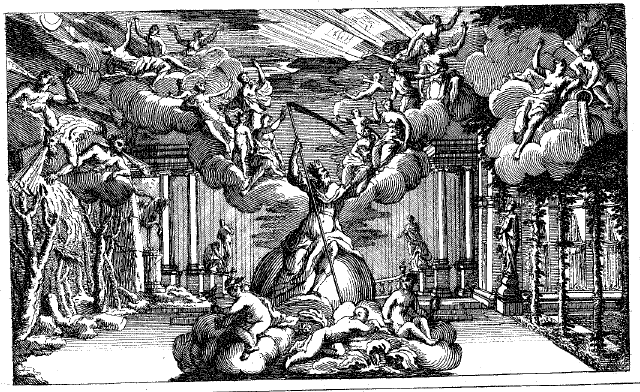
Atys opens with an operatic grovel:
LE TEMPS:
En vain j’ay respecté la celebre memoire
des heros des siecles passez;
c’est en vain que leurs noms si fameux
dans l’histoire,
du sort des noms communs ont esté dispensez :
nous voyons un heros dont la brillante gloire
les a presque tous effacez.
(TIME: ‘Tis in vain I’ve recorded the memories of heroes of past ages … we see a hero whose shining glory has almost erased them all.)
CHOEUR DES HEURES:
Ses justes loix,
ses grands exploits
rendront sa memoire éternelle :
chaque jour, chaque instant
adjouste encor à son nom esclattant
une gloire nouvelle.
(THE HOURS: His just laws, his great deeds will render his memory eternal; every day, every instant adds a new glory to his brilliant name.)
When Lully and Quinault have removed their tongues from the royal boots, they get on with the story.
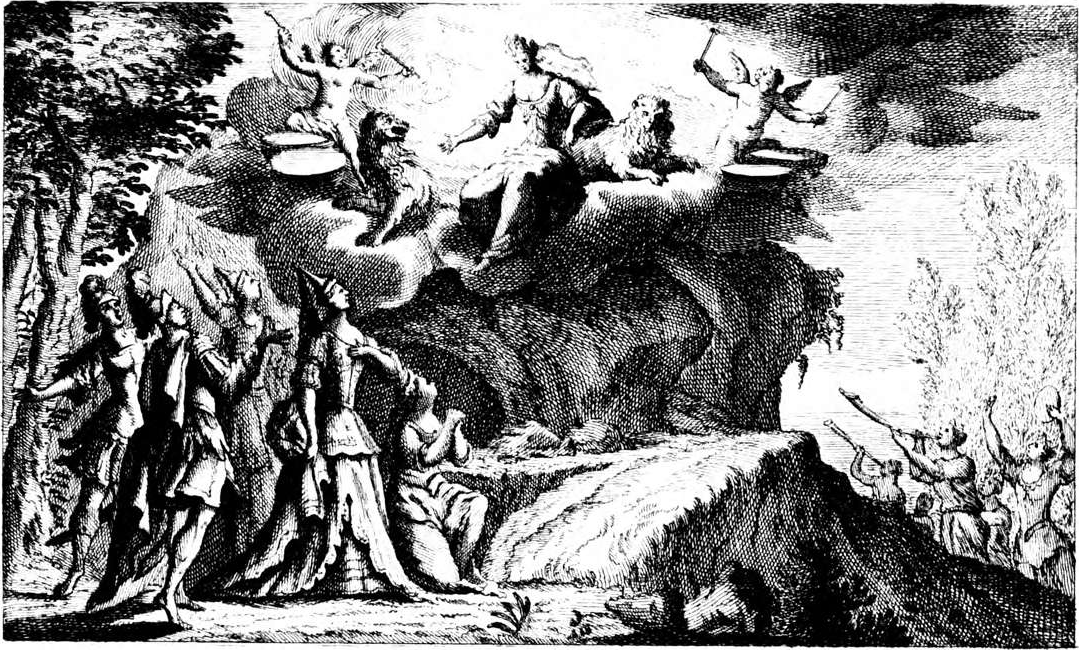
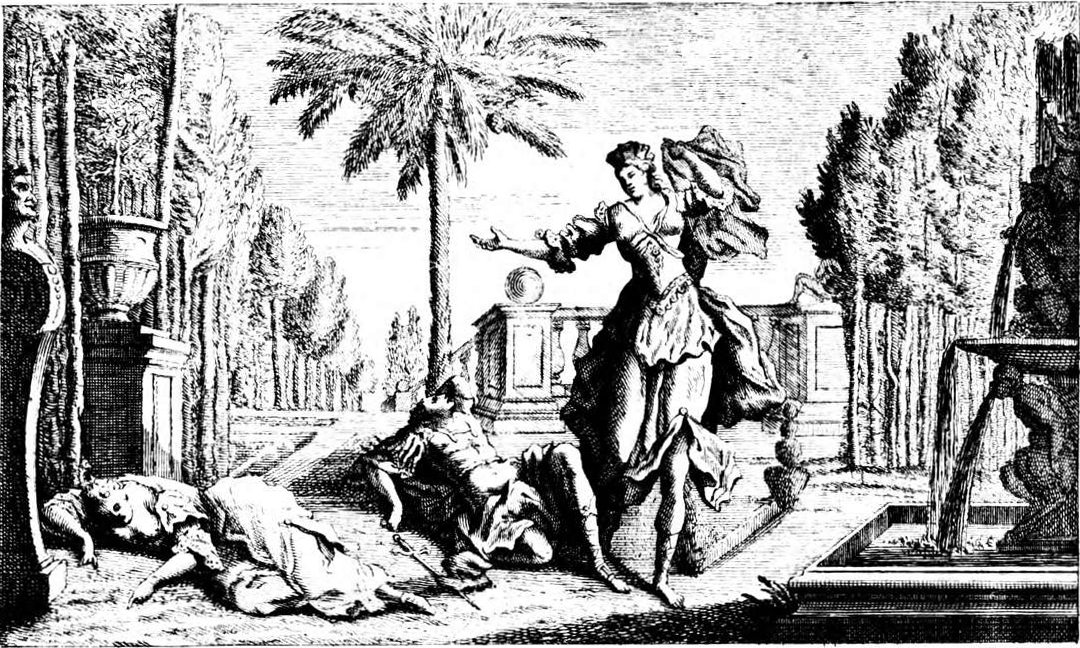
The goddess Cybele loves Atys, who loves the nymph Sangaride, who’s about to marry Célœnus, son of Neptune and king of Phrygia. At the end, Cybele drives Atys mad; he kills Sangaride, and is then turned into a TREE. (He was pine-ing for his lost love.)
That’s really all the plot of a three-hour opera (propped up by dancing).
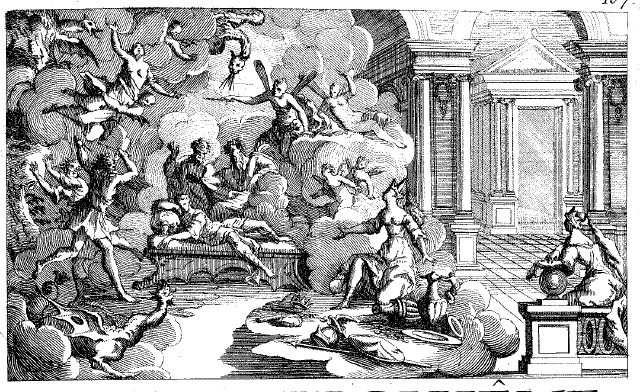
The high point of the action is when Atys lays down for a nap in the middle of the opera. “Dormons, dormons tous!” the god of Sleep tells those audience members who still have their eyes open. Still, it’s a lovely piece.
The score is very thin. There’s the occasional good ensemble (e.g. the quartet “Allons, accourez tous” and the ensemble “Venez, reine des dieux, renez” in Act I), and a nice trio in Act IV.
Otherwise, the difference between recitatives and arias is that arias are accompanied by the orchestra, and recitatives aren’t. (They only get a keyboard and a plucked string brass instrument.) No matter; they all sound the same.
Perhaps the best way to approach it isn’t as opera at all, where there’s a strong musical interest, but as a sort of sung Racine. In those days, theatre was partly sung (chanted), so there was less of a gulf between straight theatre and music theatre for Lully’s audience than for us.
Lully used music to underline the action, not as an end in itself; he calls for singing actors rather than vocal acrobats. It’s closer to Monteverdi than Verdi.
Take the last act, which just about saves the piece. It’s a fine tragic finish, with (in the production I watched) some good acting from the Cybèle and Atys. But there’s little in the way of absolute music.
SUGGESTED RECORDING

Bernard Richter (Atys), Stéphanie d’Oustrac (Cybèle), Emmanuelle de Negri (Sangaride), Nicolas Rivenq (Célénus), Marc Mauillon (Idas), Sophie Daneman (Doris), with Les Arts Florissants conducted by William Christie. Paris, 2011.
A 2011 revival of the famous 1987 production, set in the Sun King’s Versailles. It’s beautiful, with elegant 17th century costumes, and much of the acting is excellent.
 The Opera Scribe
When you state « the score is very thin » you certainly realise that we do not in fact have the original score but a thinned frame work and a later partial reconstruction? Instrumentation is so crucial here (as born out by the few indications found in the reduced score) that we should be careful to judge the piece as long as it is presented in tentative reconstructions not always in impeccable taste. The more successful attempts however reveal glimpses of peerless elegance.
LikeLike
Is there a version you can recommend other than Christie’s? I’ve heard the 1987 recording and watched the more recent video. It would be interesting to hear a version conducted by Rousset or Niquet.
LikeLike